
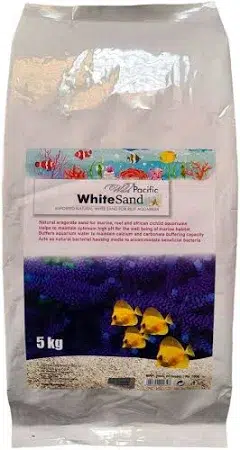
Aquatic Remedies Wild Pacific White Sand is a natural aragonite substrate made for marine, reef, and African cichlid aquariums. It provides a clean, bright base that enhances colours and contributes to stable water chemistry. The grains are natural and reef-friendly.
Product overview
This sand is aragonite-based, so it helps buffer aquarium water and maintain higher pH values that marine creatures prefer. Thus, it supplies carbonate and calcium buffering and acts as a living surface for beneficial bacteria. Consequently, it speeds biological stability in new or established systems.
Key benefits
-
Natural aragonite grains that support water buffering and stable pH.
-
Encourages colonization of beneficial bacteria for biological filtration.
-
Bright white colour that improves coral and fish contrast.
-
Soft, safe substrate for invertebrates and bottom-dwelling fish.
Composition & performance
The product is primarily composed of aragonite, a form of calcium carbonate. Therefore, it slowly dissolves under low pH conditions to release carbonate and calcium ions. This buffering action helps maintain alkalinity and supports skeletal growth in corals. In short, it behaves like many premium reef sands used by hobbyists and professionals.
Suitable aquarium types
-
Reef and mixed reef aquariums (SPS, LPS, soft corals).
-
Marine fish-only systems.
-
African cichlid tanks where aragonite buffering is desired.
Because it is natural aragonite, it suits any system that benefits from calcium-carbonate buffering.
Pack sizes & appearance
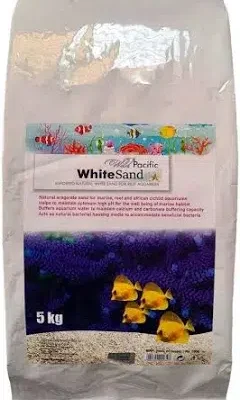
Aquatic Remedies Wild Pacific White Sand is typically sold in practical retail packs (for example 5 kg). The sand has a bright, white appearance and medium-fine grain size that looks natural in aquascapes and displays.
How to use (simple steps)
-
Rinse only if the product has dust from handling; many users place it straight in the tank.
-
Add a 1–3 cm layer for most aquariums; increase depth for burrowing species.
-
Arrange before adding corals and frag plugs.
-
Monitor pH and alkalinity after adding new substrate.
Tips for best results
-
Test alkalinity and calcium regularly after setup.
-
Use a mix of sand depth to create microhabitats.
-
Avoid using acidic freshwater to rinse heavily; gentle rinsing is enough if needed.
-
Pair with live rock and good flow for optimal biological filtration.
Storage & handling
Store in a cool, dry place. Keep the bag sealed to prevent moisture and impurities. Handle carefully during pouring to avoid creating dust clouds.


Reviews
Clear filtersThere are no reviews yet.